Feb 23, 2017

Jun 27, 2015
Dec 25, 2013
Why is Canada naming its warships after U.S. defeats?

Yes, America's good-natured neighbor to the north is naming its newest naval vessels after battles where Canadians trounced U.S. invaders in the War of 1812. The Battle of Queenston Heights, on Oct. 13, 1812, saw an outnumbered force of 1,300 British regulars, Canadian militiamen, and Mohawk irregulars repel a poorly organized attempt by 3,500 U.S. regulars and militiamen to cross the Niagara River. The Battle of Chateauguay, on Oct. 26, 1813*, was another embarrassing U.S. defeat, when a 1,600-strong British and Canadian force defeated 2,600 Americans who were attempting to capture Montreal.
"The Government of Canada has named the new Joint Support Ships (JSS) to commemorate the War of 1812, in recognition of the achievements and sacrifices made by those early Canadians who fought and died in these significant battles of Queenston Heights and Chateauguay," said Canadian Navy spokeswoman Lt. Jennifer Fidler in an email to Foreign Policy. "The War of 1812 was a defining moment that contributed to shaping our identity as Canadians and ultimately our existence as a country. It laid the foundation for Confederation and the cornerstones of our political institutions."
Historians may quibble: Since Canada was a British colony rather than a nation in 1812, then technically the war was fought between Great Britain and the United States, and the glory of these victories belongs to the British. But history is no match for patriotic fervor. "These two key victories helped ensure our independent development in what was then British North America, leading to the eventual achievement of Canadian nationhood and a mutually respectful relationship with the United States of America," Fidler said.
The HMCS Queenston and Chateauguay, which together will cost $2.6 billion Canadian, are scheduled to enter service in 2019. They are designed to replace older Canadian Navy replenishment ships. They are the first vessels to be named after U.S. defeats by Canada, but they may not be the last. "If an additional Joint Support Ships vessel is constructed, the names of other prominent War of 1812 battles will be considered," noted Fidler.
Not surprisingly, the naming of the two ships comes after Canadian Prime Minister Stephen Harper's government sought last year to heavily commemorate the 200th anniversary of the War of 1812. However, polls suggest that the festivities did not exactly stoke patriotic fires.
Should Americans feel aggrieved at Canada's actions, their northern friends have a fair riposte: We're only giving you a taste of your own medicine. The United States has never been shy about boasting of its own victories. British sailors must sail alongside current U.S. warships such as the USS Bunker Hill, USS Cowpens, and the USS Lake Champlain (at least the cruiser USS Yorktown has been retired). And the Japanese have to put up with the cruiser USS Leyte Gulf and the amphibious assault ship USS Iwo Jima, the Germans with the USS Normandy and USS Anzio -- and I'm sure the Vietnamese will look forward to a port visit from the cruiser USS Hue City. Not even domestic enemies are spared; Confederate nostalgists can grit their teeth over the USS Gettysburg and USS Vicksburg.
Britain and France are more or less friends now, but the British stuck it to the French with the now-retired nuclear submarine HMS Trafalgar. The Dutch have their frigate HNLMS Tromp (named after two admirals who beat the British). And the French have their frigate La Fayette, named after the general who helped the Americans beat the British, and of course the carrier Charles de Gaulle, named after a leader who drove the Americans and British crazy.
Perhaps the only nations that can't name their ships after famous victories are the former Axis powers. Germany would find it impolitic to name a ship the Denmark Strait or the Admiral Dönitz. The same goes for Japan. Will we ever see a Japanese warship named the Pearl Harbor?
Sep 2, 2013
Aug 12, 2013
Mesin Mati Mendadak, Kawasaki Recall Ninja 300 di Kanada

Awalnya kasus ini muncul di Amerika Serikat, namun badan keselamatan transportasi di negeri Paman Sam ini National Highway Traffic Safety Administration’s (NHTSA) belum membuat keputusan apapun meski sudah ada 36 komplain yang masuk.
Bahkan seperti dilaporkan motorcycle.com, ada salah satu korban yang mengaku tertabrak kendaraan lain dari belakang setelah tiba-tiba mesin motornya mati mendadak. Si korban bahkan sampai mengalami patah tulang bahu.
Dalam penangannya, pihak Kawasaki akan mengganti electronic control unit (ECU) pada perangkat injeksi untuk 745 Kawasaki Ninja 300 di Kanada.
Sedang untuk di Indonesia, Kawasaki Ninja hadir dengan kapasitas mesin 250 cc saja, bukan 300 cc. Tapi secara desain dan basis mesin sama saja. Mudah-mudahan tidak ada keluhan engine stalling seperti di Kanada.
Jul 16, 2013
Honda Recall 2 Model Motor
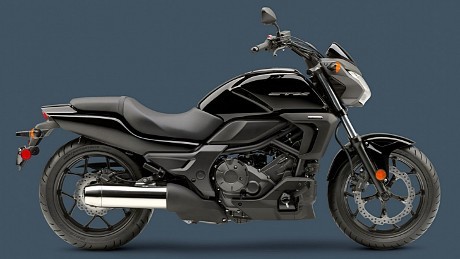
Dilansir Auto Evolution, Honda melaporkan akan menarik dua motor miliknya itu karena masalah ABS. Sejauh ini hanya 13 sepeda motor yang akan terpengaruh, tapi besar kemungkinan motor-motor lain juga akan kena recall.
Honda menjelaskan kalau modulator ABS kedua produknya ini kemungkinan telah salah diproduksi dan bisa gagal berfungsi dengan baik. Honda mengkhawatirkan kesalahan ini akan menimbulkan potensi kecelakaan.
Sebagai permulaan, kampanye recall Honda ini baru akan dilakukan di Kanada, namun biasanya bila Kanada melakukan recall, Amerika Serikat juga akan ikut serta.
Honda menjelaskan kalau mereka akan bertanggung jawab dengan mengganti modulator ABS tanpa biaya alias gratis.
Jun 19, 2013
Confirmed: 1-Billion-Year-Old Water Tastes 'Terrible'

The next question: Is it drinkable? The answer: Not really, but a sip won't kill you. According to an interview in the Los Angeles Times, one of the paper's authors, Barbara Sherwood Lollar, has tasted it, and it was "terrible," she reports. "It is much saltier than seawater."
Her description of its appearance doesn't make it sound very appetizing either:
What jumps out at you first is the saltiness. Because of the reactions between the water and the rock, it is extremely salty. It is more viscous than tap water. It has the consistency of a very light maple syrup. It doesn't have color when it comes out, but as soon as it comes into contact with oxygen it turns an orangy color because the minerals in it begin to form -- especially the iron.
But that didn't stop Lollar. She tasted it anyway -- for science. And because she wanted to know how salty it was. But because she is a lady and a scholar**, she took this one for the team, and did not allow her students to taste it.
Now onto the bigger questions: Is there life in this billion-year-old water? Lollar thinks it's possible. "The water has the same kind of energy that supports the microbial life found near deep-sea vents and in the South African gold mine," she the LA Times's Deborah Netburn, "We have shown these waters are habitable. The next question is whether or not they are inhabited." And if they are, the question will become what's living there and when did it arrive.
Lollar and her team are investigating, but she says it will be about a year before they have results.
Jun 12, 2013
Butterflies inspire anti-counterfeit tech

To be precise, Nanotech Security Corp. in Vancouver is using the natural structure of the wings of a Morpho butterfly, a South American insect famous for its bright, iridescent blue or green wings, to create a visual image that would be practically impossible to counterfeit. The technology was developed at British Columbia’s Simon Fraser University, and licensed to the company.
The phenomenon Nanotech employs is similar to the way some animals, including male peacocks, produce iridescent colors: instead of using proteins and other chemicals to produce a hue, the creature’s feathers or scales play with light, using very tiny holes that reflect different colors or wavelengths. The Morpho does this with complicated scales on its wing that produce shimmering blues and greens.
Nanotech’s printed security image can be embossed on virtually any surface, including plastics, metals, solar cells, fabrics, and paper, according to Clint Landrock, Nanotech’s chief technical officer. They even could be embedded on pills and capsules to ensure they are genuine pharmaceuticals, instead of fakes.
“It lends itself to anything your imagination can come up with,” he said, “even brake pads.”
The work is another example of what scientists call biomimicry, which adapts nature’s solutions for innovative human devices, in this instance, nano-optics, a burgeoning new technology.
Researchers at the University of Michigan, for example, use nano-optics to print pictures and images without ink or dyes.
Landrock, one of the inventors, said the Simon Fraser researchers actually studied the shingled, patterned plates of a Morpho wing to see how it handled incoming light. The trick was to make artificial “nano-hole arrays,” which produce similar iridescent efforts with simpler structures. That way, the company can mass-produce billions of nano-holes.
“We can tune the colors by changing the geometry of those hole arrays,” he said.
They used a method similar to the manufacturing of computer chips, known as electron beam lithography, to produce master nano-hole patterns embossed on silicon or quartz.
They worked at the scale of nanometers. A single nanometer is hundreds of times smaller than even the tiniest bacterial cell. The holes in the template ranged from 50 to 300 nanometers in diameter, spaced 300-600 nanometers apart. The process takes from a few hours to a couple of days to produce a master pattern, or mask, depending on the size of the mask and the number of structures. After the mastering, a second process grows the image on nickel. From there it can be transferred to any material.
The entire image could be large enough to be seen from a distance, and, if embossed on high-priced items like designer handbags, would make it easy to spot the phonies, said Doug Blakeway, Nanotech’s CEO.
“If you had a hand bag and the clasp on it had the company’s logo on it you would see it and it would turn on and off in very bright colors.” Simply moving the item or the observer would make the color flicker.
There shouldn’t be any issue with putting the image on a capsule or pill, he said. You could see the brand on it to be sure the medicine was authentic. It would not require Food and Drug Administration approval because the image would not involve dyes or pigments so medicine would not be altered in any way.
Counterfeiting this technology is unlikely, Landrock said. The image would be very difficult to reverse engineer, and expensive because of the equipment needed. The image is much brighter than any created by any other technology, he explained, including holograms.
“I like to say it is similar to describing how an old CRT television display looks compared to a new Ultra HD LED TV,” he said “They may be showing the same thing but you would never mistake one for the other.”
Landrock said the most logical use for the technology would be an anti-counterfeiting device on bank notes.
A nano-optics image can be embossed on coated paper, but many countries, including Canada and Australia, have switched to polymer plastics for its bank notes, which are even more receptive to nano-optics images. Those bills last much longer than U.S. paper currency and are much harder to counterfeit.
Since the company has only begun commercializing the technology, no country has yet signed up.
Even so, it is unlikely the U.S. dollar will see nano-optics any time soon. U.S. bank notes do not even use holograms, common in other currencies, or coated or polymer paper, according to Darlene Anderson, a spokeswoman for the U.S. Bureau of Engraving and Printing.
The reason for the conservative bills, is that most American currency is held overseas, where it is often used as the reserve currency for the undeveloped world, said Owen Linzmayer, publisher of Banknote News, an industry observer. A radical change to U.S. bills could upset international economies and flood the country with the old bills.
The same restraints do not apply for Gucci handbags.
Sep 26, 2012
Lamborghini Tarik Gallardo di 2 Negara

Menurut lembaga keselamatan Kanada dilansir, inautonews Jumat (6/9/2012) ada 96 unit Lamborghini Gallardo Coupe dan Spyder buatan 2004, 2005 dan 2006 di Kanada yang ditarik.
Recall Lamborghini Gallardo di Kanada mirip dengan yang terjadi pada Lamborghini Gallardo di Australia yakni terdapat kerusakan pada pipa power steering. Kabarnya kerusakan pada komponen tersebut juga berpotensi pada Lamborghini Gallardo di Amerika Serikat. Tapi hingga kini belum ada laporan dari pihak pemerintah AS atau Lamborghini di AS
Sebelumnya mobil terlaris Lamborghini itu terpaksa harus ditarik di Australia. Recall supercar tersebut karena mengalami kerusakan pada sistem power steering.
Memang recall tidak melibatkan banyak mobil. Recall hanya melibatkan sekitar 70 Lamborghini Gallardo coupe tahun 2004, 2005 dan 2006 dan Gallardo spyders buatan tahun 2005 dan 2006 di negeri Kanguru tersebut. Tapi sangat riskan jika dibiarkan.
Terdapat kerusakan pada pipa power steering. Pipa yang berbahan karet tersebut bisa mengalami kerusakan dalam kondisi tertentu, di mana dapat mengakibatkan kebocoran hingga menimbulkan kebakaran.
Pengguna mobil super itu pun diharapkan menghubungi diler Lamborghini terdekat untuk dilakukan perbaikan tanpa menunda waktu. Pihak pabrikan berjanji akan melakukan perbaikan tanpa dikenakan biaya.
Beruntung, sampai kerusakan ini diketahui pihak Lamborghini belum menemukan adanya korban jatuh akibat kerusakan tersebut.
Lamborghini Gallardo mampu mencapai kecepatan tertinggi 323 km/jam. Dan mampu bergerak dari 0-160 Km dalam hitungan 7 detik. Kemampuan itu karena disokong oleh mesin V10 5.2 liter.
Dec 10, 2009
Do All Guys Watch Porn?

If a guy claims he's never seen a porn, tell him there are a few scientists who would like to have a word with him. A recent study planned to compare men who watched hardcore movies with those who didn't, except for one little problem... scientists couldn't find anyone who hadn't been exposed to porn.
According to professor Simon Louis Lajeunesse, from the University of Montreal, Canada, the study was meant to study the effects of pornography.
"The objective of my work," he said, "is to observe the impact of pornography on the sexuality of men, and how it shapes their perception of men and women."
Unfortunately, his team couldn't find a single man who hadn't been exposed to it. "We started our research seeking men in their twenties who had never consumed pornography," he said, "but we couldn't find any."
The study then morphed into an examination of those who do watch porn, and it was found that single young men view it for an average of 40 minutes three times a week. That's compared to the 1.7 times a week for 20 minutes that guys in committed relationships watch.
It's weird to think that porn is so ubiquitous that they couldn't find a single man who hasn't seen it. But then again, sex is the stuff of life, so anyone not aware of it probably doesn't even have a computer.
So either the porn-virgin no longer exists, or he's in hiding, trying to stay away from the internet. Call National Geographic if you spot him.