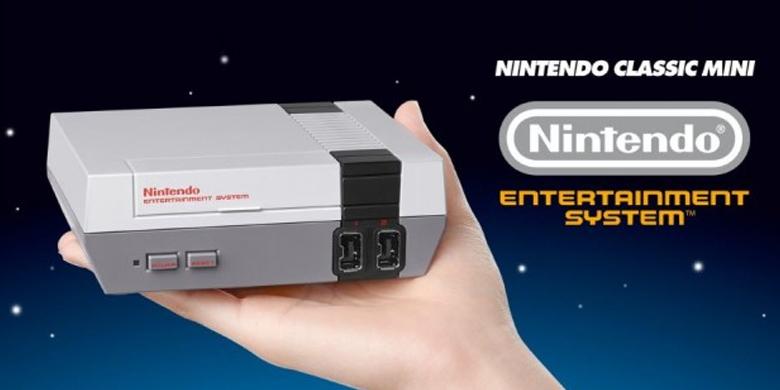
Kompas.com - Gamer yang pernah merasakan era 90-an tentu masih ingat dengan konsol legendaris Nintendo Entertainment System (NES). Kabar terbaru menyebutkan bahwa konsol tersebut akan dihidupkan kembali.
Showing posts with label Nintendo. Show all posts
Jul 18, 2016
Jul 13, 2015
Nintendo's Satoru Iwata dies at 55
Bbc.com - Japanese video game maker Nintendo has said its chief executive Satoru Iwata has died of cancer at the age of 55.
Mr Iwata underwent surgery last year and had resumed his duties after a brief period of recovery.
A highly revered figure in the Japanese gaming scene, he was considered the leading figure behind some of Nintendo's most popular devices since he joined the company in 2000.
Most recently, he led Nintendo into the rapidly growing mobile gaming sector.
Growing up in Japan in the 1980s, Super Mario was a gaming character that you couldn't avoid. But as the gaming population started to decline in the late 90s, Mr Iwata knew that he needed to make products that were more appealing to non-gamers.
And he succeeded. Nintendo DS quickly became the world's best-selling handheld game console when it was released in 2004.
Two years later, there came another successful launch of Wii which was dubbed the computer game that even your grandma can play. Together, they switched on millions of new converts to computer games.
But the rise of mobile phone games has posed a serious threat to Nintendo and some investors questioned his decision not to enter the market sooner.
As he put it himself, Mr Iwata was a chief executive who had the brain of a games developer and the heart of a gamer.
The iconic game maker has been losing market share to top competitors like Sony's PlayStation and Microsoft's XBox, with its latest Wii U console third in line.
Nintendo made its first annual operating profit in four years to the year that ended in March.
Mr Iwata underwent surgery last year and had resumed his duties after a brief period of recovery.
A highly revered figure in the Japanese gaming scene, he was considered the leading figure behind some of Nintendo's most popular devices since he joined the company in 2000.
Most recently, he led Nintendo into the rapidly growing mobile gaming sector.
Growing up in Japan in the 1980s, Super Mario was a gaming character that you couldn't avoid. But as the gaming population started to decline in the late 90s, Mr Iwata knew that he needed to make products that were more appealing to non-gamers.
And he succeeded. Nintendo DS quickly became the world's best-selling handheld game console when it was released in 2004.
Two years later, there came another successful launch of Wii which was dubbed the computer game that even your grandma can play. Together, they switched on millions of new converts to computer games.
But the rise of mobile phone games has posed a serious threat to Nintendo and some investors questioned his decision not to enter the market sooner.
As he put it himself, Mr Iwata was a chief executive who had the brain of a games developer and the heart of a gamer.
The iconic game maker has been losing market share to top competitors like Sony's PlayStation and Microsoft's XBox, with its latest Wii U console third in line.
Nintendo made its first annual operating profit in four years to the year that ended in March.
'A titan'
Mr Iwata started out as a programmer in a Nintendo subsidiary in the 1980s and became president of Nintendo in 2002.
Under his leadership, the company launched its hugely successful Wii and Nintendo DS consoles and he was considered the crucial driver behind the focus on easy-to-use consoles, a move that allowed the company to tap into a much wider audience beyond the traditional gaming community.
"Mr Iwata was a titan - he certainly will be missed," Marc Einstein, head of digital media at Frost & Sullivan in Tokyo, told the BBC.
"He was very much known for being a gamer first and a [chief executive] second - a game changing figure."
Tributes have been coming in on social media with the team at PlayStation tweeting: "Thank you for everything, Mr. Iwata."
One user @BrandonNobbs tweeted: "Nintendo might not be the most profitable company, but it's always made games with a heart. #ThankYouIwata #Nintendo."
His death comes as Nintendo expects to double its annual operating profit based on the long-awaited entry in the rapidly growing smartphone gaming sector to counter weakening sales of its traditional consoles.
"Nintendo is really at a cross roads," Mr Einstein told the BBC. "They were the last company that for a very long time were clinging to the hardware business model of their consoles."
In March this year, Nintendo announced a deal with mobile gaming company DeNA to start their foray into mobile gaming.
"The successor will most likely be someone internal and it will be crucial whether it will be someone who is serious about that step into mobile gaming."
Mr Iwata started out as a programmer in a Nintendo subsidiary in the 1980s and became president of Nintendo in 2002.
Under his leadership, the company launched its hugely successful Wii and Nintendo DS consoles and he was considered the crucial driver behind the focus on easy-to-use consoles, a move that allowed the company to tap into a much wider audience beyond the traditional gaming community.
"Mr Iwata was a titan - he certainly will be missed," Marc Einstein, head of digital media at Frost & Sullivan in Tokyo, told the BBC.
"He was very much known for being a gamer first and a [chief executive] second - a game changing figure."
Tributes have been coming in on social media with the team at PlayStation tweeting: "Thank you for everything, Mr. Iwata."
One user @BrandonNobbs tweeted: "Nintendo might not be the most profitable company, but it's always made games with a heart. #ThankYouIwata #Nintendo."
His death comes as Nintendo expects to double its annual operating profit based on the long-awaited entry in the rapidly growing smartphone gaming sector to counter weakening sales of its traditional consoles.
"Nintendo is really at a cross roads," Mr Einstein told the BBC. "They were the last company that for a very long time were clinging to the hardware business model of their consoles."
In March this year, Nintendo announced a deal with mobile gaming company DeNA to start their foray into mobile gaming.
"The successor will most likely be someone internal and it will be crucial whether it will be someone who is serious about that step into mobile gaming."
Jun 26, 2015
Jun 13, 2014
Mar 5, 2014
Feb 26, 2014
Feb 23, 2014
Feb 12, 2014
Is it game over for Nintendo?
Cnn.com - Nearly 30 years ago, Nintendo essentially gave the videogame industry a new life, and a second chance. In 1985, when the original Nintendo Entertainment System debuted at the North American International Toy Fair, no one even wanted to think about videogames after the great crash that saw revenues fall from $3.2 billion in 1983 to just $100 million in 1985.
Fast-forward to 2013. The industry has "leveled up," so to speak, to $93 billion in 2013 -- and according to research from Gartner, that figure could reach $111 billion by 2015. The question now is whether Nintendo will still be a part of it. The company, which was founded in 1889 as a playing-card maker, has had to reinvent itself over the years. It may need to do so again as it faces declining sales of its Wii U videogame console.
Last month, Nintendo president Satoru Iwata announced that the company had revised its full-year consolidated financial forecast for the fiscal year ending Mar. 31, 2014. Its new outlook was not good: Nintendo cut its forecast for its Wii U's annual sales by more than two thirds, from 9 million to 2.8 million, and also halved the projection for game sales to just 19 million units. The Wii U, which came out in November 2012, is far from the hit that was the original Wii, which came out in 2006 and has sold more than 100 million units worldwide.
However, part of Nintendo's woes could be that the original Wii sold well, but didn't exactly result in massive subsequent software sales, which is what any videogame hardware maker wants -- and even has to see. "The whole point of a hardware play is to sell software," independent videogame analyst Billy Pidgeon said. "Nintendo does make money on the hardware while others don't, but in the end that is really inconsequential."
The original Wii did have a great install base, but that wasn't enough, Pidgeon said. "They had so much hardware out there that it should have moved a lot more software," he said. "There were far too many cases where the Wii was bought by people who just played the one game that came with it."
Since the January announcement, the question has been raised: Should Nintendo stick with its strategy and try again, or move on to a different approach? (Is the princess in the next castle?) Since the mid-January statements by Iwata, there has been chatter that the company could shift its focus to developing games for other devices. Piers Harding-Rolls, director of games research at IHS Technology, said that this could lead to short-term revenue growth as Mario and friends move to mobile devices and tablets. But it appears that the company has already opted to stick to its core strategy.
"Nintendo, similar to Apple (AAPL), Google (GOOG), and perhaps even Valve, follows its own product development path and is reticent to follow market trends where it can only make a marginal impact," Harding-Rolls noted in his market insight report. "A short-term, or marginal impact is not aligned to its long-term strategic goals where it seeks to make relatively big bets around innovation, which increases risk but offers significant rewards."
Nintendo has acknowledged that the Wii U is in a terrible position, Harding-Rolls said, but the company has ruled out any short-term fixes such as lowering the price. Instead, Nintendo may seek to concentrate on accessories such as the Wii U GamePad. But that could do little to solve the problems even in the short term.
"These improvements are welcome for a platform struggling in the market, but appear 'bitty' or piecemeal and less than comprehensive," Harding-Rolls added. "There was no mention of significant further investment in marketing to actually tell consumers what the Wii U is, and to make it clear it is different to the Wii."
While Nintendo had a year's lead over rivals Microsoft (MSFT) and Sony (SNE), which each respectively launched next-generation videogame systems last November, it isn't likely that Mario will show up on those systems anytime soon.
"For Nintendo, its game franchises and hardware are joined at the hip. Nintendo is a game maker, and hardware is the vehicle to sell its own games," videogame analyst George Chronis of DFC Intelligence told Fortune. "That is a philosophy that is directly at odds with Sony and Microsoft which are in the business to sell hardware and create first-party games to further the selling of their consoles."
Since the release of the Nintendo 64 in 1995, the company has taken a strategy that does not require it to invest heavily in high-performance hardware. "To compete with Sony and Microsoft in developing bleeding-edge consoles was seen as a costly waste of capital," Chronis added. "So with both the GameCube and the Wii, Nintendo could operate with negligible R&D and production costs compared to Sony and Microsoft. The decision taken during the development of the Wii was to target mainstream consumers that were not already Xbox or PlayStation owners with easily accessible games that were fun to play, and were novel thanks to the advent of motion control input. The Wii turned out to be a tremendous success and won the last cycle."
But that success could be misleading.
"It depends on how you define success," Pidgeon said. "What you need to look at is the active install base, and whether people are buying multiple software titles. This certainly wasn't the case with the Wii."
The lack of software sales even resulted in some third-party publishers pulling back support. Electronic Arts (EA) has all but officially pulled support for the Wii U after releasing a number of high-profile launch titles for the system as it failed to catch on with gamers. Without high-profile titles in the pipeline, sales of the Wii U hardware continue to remain sluggish.
"That is the other big issue for Nintendo," Pidgeon said. "They haven't created a compelling business opportunity for third party." Meanwhile, a new Smash Bros. and Mario Kart -- both Nintendo titles -- are under development.
"These new initiatives are unlikely to provide an immediate or significant financial turnaround, but they will consume research and development budgets in quick time," Harding-Rolls said. Nonetheless, "this dependence on innovation and individuality is core to the company staying relevant beyond the short term and protecting the Nintendo brand value."
Fast-forward to 2013. The industry has "leveled up," so to speak, to $93 billion in 2013 -- and according to research from Gartner, that figure could reach $111 billion by 2015. The question now is whether Nintendo will still be a part of it. The company, which was founded in 1889 as a playing-card maker, has had to reinvent itself over the years. It may need to do so again as it faces declining sales of its Wii U videogame console.
Last month, Nintendo president Satoru Iwata announced that the company had revised its full-year consolidated financial forecast for the fiscal year ending Mar. 31, 2014. Its new outlook was not good: Nintendo cut its forecast for its Wii U's annual sales by more than two thirds, from 9 million to 2.8 million, and also halved the projection for game sales to just 19 million units. The Wii U, which came out in November 2012, is far from the hit that was the original Wii, which came out in 2006 and has sold more than 100 million units worldwide.
However, part of Nintendo's woes could be that the original Wii sold well, but didn't exactly result in massive subsequent software sales, which is what any videogame hardware maker wants -- and even has to see. "The whole point of a hardware play is to sell software," independent videogame analyst Billy Pidgeon said. "Nintendo does make money on the hardware while others don't, but in the end that is really inconsequential."
The original Wii did have a great install base, but that wasn't enough, Pidgeon said. "They had so much hardware out there that it should have moved a lot more software," he said. "There were far too many cases where the Wii was bought by people who just played the one game that came with it."
Since the January announcement, the question has been raised: Should Nintendo stick with its strategy and try again, or move on to a different approach? (Is the princess in the next castle?) Since the mid-January statements by Iwata, there has been chatter that the company could shift its focus to developing games for other devices. Piers Harding-Rolls, director of games research at IHS Technology, said that this could lead to short-term revenue growth as Mario and friends move to mobile devices and tablets. But it appears that the company has already opted to stick to its core strategy.
"Nintendo, similar to Apple (AAPL), Google (GOOG), and perhaps even Valve, follows its own product development path and is reticent to follow market trends where it can only make a marginal impact," Harding-Rolls noted in his market insight report. "A short-term, or marginal impact is not aligned to its long-term strategic goals where it seeks to make relatively big bets around innovation, which increases risk but offers significant rewards."
Nintendo has acknowledged that the Wii U is in a terrible position, Harding-Rolls said, but the company has ruled out any short-term fixes such as lowering the price. Instead, Nintendo may seek to concentrate on accessories such as the Wii U GamePad. But that could do little to solve the problems even in the short term.
"These improvements are welcome for a platform struggling in the market, but appear 'bitty' or piecemeal and less than comprehensive," Harding-Rolls added. "There was no mention of significant further investment in marketing to actually tell consumers what the Wii U is, and to make it clear it is different to the Wii."
While Nintendo had a year's lead over rivals Microsoft (MSFT) and Sony (SNE), which each respectively launched next-generation videogame systems last November, it isn't likely that Mario will show up on those systems anytime soon.
"For Nintendo, its game franchises and hardware are joined at the hip. Nintendo is a game maker, and hardware is the vehicle to sell its own games," videogame analyst George Chronis of DFC Intelligence told Fortune. "That is a philosophy that is directly at odds with Sony and Microsoft which are in the business to sell hardware and create first-party games to further the selling of their consoles."
Since the release of the Nintendo 64 in 1995, the company has taken a strategy that does not require it to invest heavily in high-performance hardware. "To compete with Sony and Microsoft in developing bleeding-edge consoles was seen as a costly waste of capital," Chronis added. "So with both the GameCube and the Wii, Nintendo could operate with negligible R&D and production costs compared to Sony and Microsoft. The decision taken during the development of the Wii was to target mainstream consumers that were not already Xbox or PlayStation owners with easily accessible games that were fun to play, and were novel thanks to the advent of motion control input. The Wii turned out to be a tremendous success and won the last cycle."
But that success could be misleading.
"It depends on how you define success," Pidgeon said. "What you need to look at is the active install base, and whether people are buying multiple software titles. This certainly wasn't the case with the Wii."
The lack of software sales even resulted in some third-party publishers pulling back support. Electronic Arts (EA) has all but officially pulled support for the Wii U after releasing a number of high-profile launch titles for the system as it failed to catch on with gamers. Without high-profile titles in the pipeline, sales of the Wii U hardware continue to remain sluggish.
"That is the other big issue for Nintendo," Pidgeon said. "They haven't created a compelling business opportunity for third party." Meanwhile, a new Smash Bros. and Mario Kart -- both Nintendo titles -- are under development.
"These new initiatives are unlikely to provide an immediate or significant financial turnaround, but they will consume research and development budgets in quick time," Harding-Rolls said. Nonetheless, "this dependence on innovation and individuality is core to the company staying relevant beyond the short term and protecting the Nintendo brand value."
Subscribe to:
Posts (Atom)