Dec 16, 2015
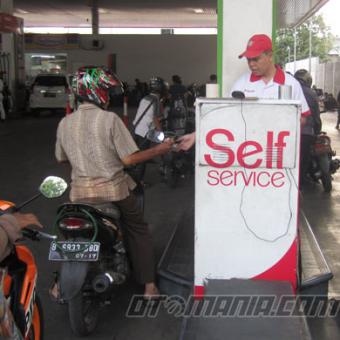
Supaya "Anti-norak" kalau Isi Bensin Sendiri tanpa Petugas
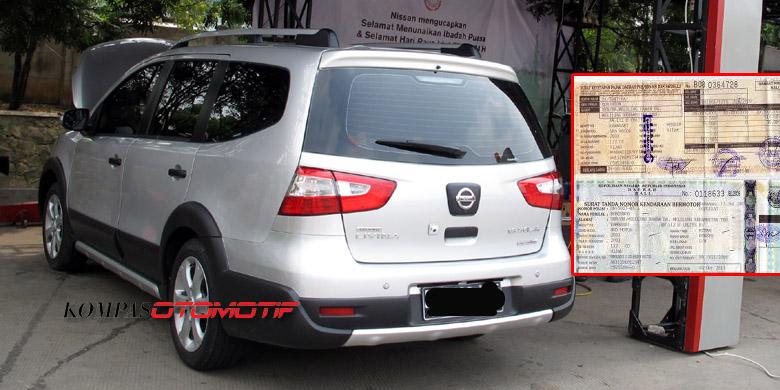
Secara Teori, Mengurus STNK Hilang itu Mudah
Aug 6, 2015
Jan 31, 2015
Aug 27, 2014
Aug 26, 2013
May 15, 2013
May 8, 2013
7 ways to spend less on meds
Why? To save money. You know this is a bad idea, but here’s what you may not know: If you fill your prescription at the wrong pharmacy, you could pay up to 447 percent more, according to a new study featured in the May 2013 issue of Consumer Reports.
To investigate drug costs across the country, secret shoppers called more than 200 U.S. pharmacies to price check 30-day supplies of five common genetic prescriptions: the diabetes drug Actos (pioglitazone), the antidepressant Lexapro (escitalopram), the cholesterol regulator Lipitor (atorvastatin), the blood thinner Plavix (clopidogrel), and the asthma drug Singulair (montelukast).
Researchers then tallied the cost of all five drugs at each store and compared the bills.
Overall, Costco was the least expensive—and you don’t even need to be a member to fill your Rx there. Online retailers such as Healthwarehouse.com and Familymeds.com had reasonable prices, too. But according to the secret shoppers, CVS was the most expensive; the prescriptions cost a total of $749 more than they did at Costco. Prices at Rite Aid and Target weren’t much cheaper than at CVS. And while independent pharmacy and grocery store pharmacy prices varied widely, stores outside urban areas tended to charge less.
No matter where you shop, a little research can help you get the best price per pill. Ask your pharmacist these questions so you won’t pay a penny more than you have to:
“Is there a generic version that’s cheaper?”
When you invest in a designer bag, you probably want the real deal—not a knock-off. But unlike with accessories, most generic drugs are just as effective as their name-brand counterparts. Ask your doctor to prescribe the generic version of the drug you need, or if you don’t realize you’ve been given a name-brand Rx until you get to the drugstore, you can always ask the pharmacist for a comparable generic version. Most pharmacists will contact your doctor directly to confirm this change.
“Can you match the price I found at another pharmacy?”
While it’s smart to shop around for the best prices, you’ll want to buy all of your prescriptions from the same place so that your pharmacist can keep tabs on what you’re taking and advise against potentially dangerous drug combinations. To get the lowest price at the pharmacy of your choice, just ask: Independent drug stores will often match other pharmacies’ prices to keep your business, says Stephen W. Schondelmeyer, PharmD, a professor of pharmacy economics at the University of Minnesota.
So if you don’t want to shop at Costco, you can still call them, ask what they’d charge for your meds, and use that to negotiate a better price from the mom-and-pop pharmacy you prefer.
"Do you give student discounts?”
Because secret shoppers in the study weren’t always offered the lowest price available up front, it pays to ask if you’re getting the lowest price. This question could prompt your pharmacist to disclose additional discounts: Some places offers student and senior discounts, for example.
“Is it cheaper to get a 90-day supply?”
For drugs you take every day, it’s more convenient and often cheaper to buy in bulk, (i.e., a 90-day dose instead of a 30-day one). Target’s pharmacy, for instance, offers more than 300 generic drugs that cost $4 for a 30-day supply, and $10 for a 90-day supply.
“What’s the price without my insurance?”
Just because you have health insurance doesn’t mean you should always use it. Check the retail price just in case your meds cost less than your prescription drug co-pay. For instance, generic Lexapro costs $7 for a 30-day dose at Costco. So if your insurance co-pay is $10, you’re better off paying the full price.
"Do you have a loyalty card or prescription program discounts?”
Many stores do. For instance, the CVS Health Savings pass ($15/year) offers card-holders a 90-day supply of more than 400 generic drugs for $11.99 a pop. The Walgreens Prescription Savings Club ($20/year) promises an annual savings up of up to $79.13 per 90-day supply of generic drugs. And Rite Aid’s free Rx Savings Program discounts name-brand drugs by 15 percent and offers certain generic drugs for $9.99 per 30-day supply, or $15.99 per 90-day supply.
“Do you accept any independent prescription discount cards?”
No insurance? No problem. Independent prescription discount cards are easy to find online—and they’re often free. To unlock discounts on more than 20,000 name-brand and generic drugs, print a Free Drug Card online and check the site to find a nearby pharmacy that accepts it. Then, flash your card when you pick up your prescription—you’ll save up to 75 percent.
May 7, 2013
Mar 17, 2013
How to Not Get Ripped Off by Your Mechanic
That's not to say that every repair will be inexpensive—timing belts and heater cores, for example, are notoriously expensive to repair regardless of the make or model—but here are a few ways to make sure that $120 brake job doesn't turn into a $1,800 leak in your checking account.
The most fundamental and essential element of not getting ripped off by your mechanic is to only do business with an honest shop. That sounds obvious, but it's easier said than done. From shade-tree mechanics to nationally-branded repair centers and dealerships, many shops can be less-than-completely-ethical when it comes to billing for repairs and service. But to find an honest shop, you should first ask around.
Survey your friends and family for suggestions, especially those that drive a similar make, model, or year of vehicle. Automotive repair businesses thrive on word-of-mouth advertising; it's easily the biggest driver of new customer traffic for independent and local shops. That also makes it the most reliable method of narrowing down your search. It's safe to assume that people won't refer you to someone who screwed them over.
If you've just moved to a new town and don't know anybody yet, check out Cartalk.com and RepairPal for free local referrals to quality shops. Avoid reviews from sites like Yelp, as they are written almost exclusively by disgruntled customers.
Independent shops should also get some added consideration over the big-box shops, because the business model dictates they build long-term relationships with their customers. Any shop that routinely overcharges customers risks damaging that relationship and could quickly find itself on the wrong end of negative reviews. An added benefit of this long-term customer service is that an independent shop will be better able to develop and maintain a full service history for the vehicle, which will help guide scheduled maintenance (and looks great when you want to resell it).
When checking out an unfamiliar mechanic's shop for the first time look for the following:
- A clean lot with plenty of turnover: Quality mechanics take pride in the appearance of their shops and rapidness of their repairs. If the shop's lot is clean, the work floor tidy and bright, and there aren't a bunch of half-repaired clunkers lined up out front, that's good.
- A knowledgeable Service Writer: The service writer is the guy that sits behind the shop's front counter and produces the estimates and repair bills. He's the one that you'll be primarily interacting with while your car is in the shop and is responsible for answering the questions you have. If he's reticent or not very helpful, that's a huge red flag.
- Talk to the mechanics: If possible, talk to the guys that will actually have their hands under the hood. Get a feel for their age and expertise. Some older mechanics will be whizzes at fixing classics but may not be as sharp when it comes to scanning the on-board diagnostics of this year's 5-Series. Also ask about how long they've been with the shop. A high turnover rate is very, very bad. If the shop's been there for more than a year but none of the mechanics have been there longer than six months, bail.
Don't Get Pushed Around
There's nothing a shop loves hearing more than "Do whatever's necessary." This is the goose that lays the golden crankshaft seal job, a licence to steal, and the four words that should never, ever exit your mouth in the presence of a mechanic. Instead, take control over what's being done to your car—and how much you're paying for it.
For each problem discovered with your car, have your shop generate a separate written estimate with the total cost of parts and labor—not parts and labor "plus fluids," the total cost. So, for instance, an A/C recharge on a '97 Ram 1500 may only be $75 parts and labor "plus refrigerant," but the extra two pounds of R-134A at $2.75 an ounce will run you an unforeseen $44. A thermostat replacement on a late model BMW is expensive enough with the $65 OEM thermo and a half hour of $120/hour labor, but could wind up costing another unexpected $35-50 when the mechanic tops off your fluids with BMW's uber-expensive, proprietary coolant blend.
Don't let them suddenly tack on more work than you came in for, either. Several states have consumer protection laws requires that a written, itemized estimate be issued to and signed by the customer for any service or repair beyond what was authorized when it was dropped off before that work can commence. Whether or not your state is one of them, get one. Don't sign it until you understand exactly what is being done and, more importantly, why. Have the service writer explain how the repairs he's suggesting will alleviate the symptoms you've brought it in with. The final bill will likely vary slightly from the number you were quoted, but it should never be more than 10 percent higher than what you were told.
If the shop is suggesting scheduled maintenance, which occurs at specific mileage and chronological increments as the car ages, check the scheduled maintenance services outlined your owner's manual against the itemized list you (should have) gotten from the shop. If the two don't match up, ask why. Scheduled maintenance is set by the manufacturer for each make and model and generally shouldn't be deviated from unless there's a good reason (i.e., there's no need to check a car's rotors at the 30,000 miles service if you'd brought it in the previous month four wheel brake job; the inspection would have been completed then.)
If you've been jumping around from mechanic to mechanic for a while, you'll do well to keep all of your service records and receipts—preferably in a waterproof envelope in your trunk. Seriously. Since you don't have a single shop tracking your vehicle's service history for you, you'll have to do it yourself. It is worth it.
By maintaining a solid service history, you'll be able to check these records when a new mechanic tells you that, say, your steering is shot while replacing a couple of brake lights and verify that a pair of tie rods were replaced recently. This doesn't imply that the new shop is run by crooks, mind you—the last shop could have bungled the installation, the replacement parts themselves could have been defective, or you could just drive like an ass and go through steering joints every half year—but even knowing that it was done will prevent you from blindly shelling out cash for unnecessary repairs.
On a related note, if something does go wrong with a recently replaced part, know your shop's warranty policy. Know how long and how many miles it lasts. Some shops will warranty a part for more than a year or 10,000 miles, others will offer brake-light warranties (the warranty ends when they can no longer see your car's brake lights). Also make sure you know if warranty repairs cover just the cost of the replacement part or if they include the associated labor as well.
It's tempting for unscrupulous shops to swindle uneducated customers because it's really, ludicrously, painfully easy. If a shop calls you up and says that the CEL is bouncing back a "code G7: inoperable bailiff, reading out of range" and that you need a $1500 TCP/IP sensor and fluid flush to fix it—and you pay for it—you deserve to get ripped off. Ask them to explain what any confusing words mean in a way that non-mechanics can understand. Don't get off the phone or sign any work order until you have a good grasp of what exactly being done to your car in plain English. Even then, tell the shop you'll think it over and get right back to them. Then, get a second opinion.
Call a couple of other reputable shops in the area and request a quick estimate for the same job. It doesn't need to be written but should discern part costs from labor. If your shop's price is significantly (25 percent or more) higher than what's being quoted, take that price to your mechanic and ask what's going on.
What's more, always request to see the broken parts when they're removed and have the mechanic show you where and how they broke. This will facilitate a better understand of how the giant rolling gadget you're driving actually works, and will help you keep it running smoothly for many more miles.
Aug 14, 2009
Matikan Fitur Mailbox di Hape Anda
- ProXL:
- Telkomsel:
- Indosat:
- ProXL, klik di sini.
- Telkomsel, klik di sini.
- Indosat, klik di sini.
- 3three, klik di sini.
- Axis, klik di sini.
Apr 13, 2009
How to make Perfect Hard Boiled Eggs Every Time
Place your eggs in a saucepan and cover with cold water. Place the saucepan on the stove on medium to high heat and bring the water to a boil. Once the water starts to boil, reduce the heat to low and simmer the eggs for 7-8 minutes.
Then remove the eggs and quickly place them in iced water. If the hard boiled eggs are left too long in the hot water, a green film forms around the yolk. Cooling them quickly in iced water prevents this film from forming. Cooling them quickly will also cause the hard boiled eggs to shrink slightly in the shell, making for easier peeling later.
If you’ll be eating the eggs right away and you want them warm, only leave them in the iced water for 10-15 seconds before peeling.
You can eat them right away, dye them for easter or store them in the refrigerator for up to a week and they’ll be ok.
There you go. That’s how you make perfect hard boiled eggs every time.
Feb 7, 2009
8 Aggressive Buying Tactics
How do you negotiate the often contentious dealer experience? It can be an intimidating and unpleasant process, and while most dealers are honest, salespeople are in the business to close deals quickly and get you to pay top dollar. Most engage in tried-and-true psychological tactics designed to get them the best possible deal.
So how do you make sure you’re doing the same for yourself? We’ve debunked the eight most common hard-sell tactics. More important, we tell you how to turn around each of them and use them to your advantage. Should you find yourself getting pressured, these replies will regain control of the situation.
1. What the Dealer Says:
"You have to make the deal today."
What You Should Say:
"Sorry, this offer expires tonight."
In this scenario the dealer quotes a price, but to apply pressure to the buyer the deal is only good for that day. This gives the buyer little chance to research the price or find a competing offer from another dealership. Fortunately, the buyer can regain control by coming up with his or her own price and adding, “My offer is only good for tonight.” A dealer desperate to make a sale will have little recourse, and should they not agree to the price the buyer is free to walk away. Just be sure to do your research before you go to the dealer so your offer is actually low enough.
2. What the Dealer Says:
"I have to check with my manager."
What You Should Say:
"I have to check with my spouse."
A salesperson often will tell you that he has to confer with a sales manager to see if the price he comes up with is agreeable. Thus, the manager becomes the bad guy and the salesperson comes off as being in the buyer’s corner. Don’t be fooled and don’t be afraid to use the same tactic. If you need time to think about it and you don’t want to come off as the bad guy, tell the salesperson you have to confer with your spouse. It helps to paint the spouse as the disagreeable sort. Don’t have a spouse? Try accountant, therapist, astrologist, cult leader, food taster, or any other authority figure whose opinion you supposedly value. Have the other person play the role of the bad guy who’s holding up the deal. It’s not uncommon for salespeople to belittle a customer for letting the “little lady” or “chauvinist husband” tell them what to do, so be prepared to set your ego aside and admit you’re only one member of the team making the decision.
3. What the Dealer Says:
"I have to put food on my table."
What You Should Say:
"I have to keep food on my table."
To play on the buyer’s compassion, the salesperson might tell you that he has to put food on his table. Apparently, the deal is so in favor of the buyer that the salesperson will starve if the deal gets any better. Remember, you’re the one unloading the cash, not the salesperson. Tell them, “I have to keep food on my table.”
4. What the Dealer Says:
"We’re already losing money on this deal."
What You Should Say:
"I’m already losing a hell of a lot of money on this deal."
To convince the buyer of the excellent deal that is being made, the salesperson might tell the buyer that the dealer is losing money on the deal. This is another tactic designed to appeal to one’s sympathy. Consider that the buyer is the one who is losing, or at least giving up, thousands of dollars. Be sure to remind the salesperson that you are the one losing the money.
5. What the Dealer Says:
"I’ve got another offer, this is in high demand."
What You Should Say:
"I could go down the street and get the same car."
Car salespeople will always try to convince the buyer that the car they are considering is in such high demand that they’d better move quickly or risk losing the car. “Other interested buyers” and “production shortages” are ruses designed to make the buyer believe that buying immediately is necessary. Mass-produced cars are, as the name implies, built in huge numbers. Even if what the dealer tells you is true, another just like the one you want will be built and available soon. And there are almost always other dealers that will have the same car or something close.
6. What the Dealer Says:
"This is the only one like it, take it or leave it."
What You Should Say:
"I am the only person who would ever buy this ridiculously unusual car."
Hard-core car enthusiasts often find themselves considering cars that ordinary buyers don’t even know exist. Consequently, the automaker doesn’t make a lot of these cars because the market for them is so thin. But they are out there. Somewhere a Cadillac dealer has a CTS with a six-speed manual transmission and it’s more than likely that the salesperson is telling the buyer, “This is the only one like it, take it or leave it.” The seller should respond in kind with, “I am the only person who would ever buy this ridiculously unusual car.”
7. What the Dealer Does:
Last-minute price increase or hidden fees
What You Should Do:
Last-minute offer decrease
If the dealer knows that you’re seriously interested and a price has been agreed upon, occasionally the dealer will surprise the buyer with a last-minute price increase or previously undisclosed fees and, of course, a plausible-sounding excuse for the increase. Don’t give in to this tactic. Try countering with a last-minute offer decrease.
8. What the Dealer Says:
"I’m throwing in all this for free."
What You Should Say:
"I don’t even want all this stuff."
A salesperson will often attempt to justify an inflated price by including valueless items like pinstriping, undercoating, fabric or paint protectant, or pre-sale inspections. Sometimes even optional equipment may be part of the deal and appear to be free. If you don’t want the extra options, just let the dealer know. Tell the dealer, “These non-factory items, if anything, make this car worth less to me.”