Jan 13, 2015
Komputer Seukuran Flashdisk Bisa Jalankan Windows 8.1
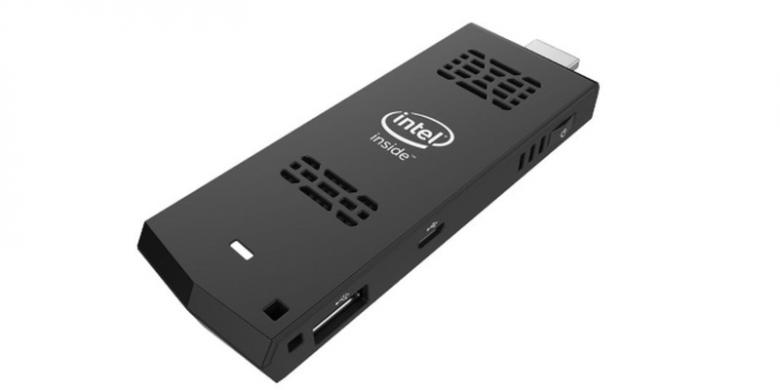
Cukup menempelkannya pada slot HDMI sebuah monitor atau TV, komputer tersebut dapat beroperasi layaknya komputer desktop. Komputer ini pun dibekali konektivitas Bluetooth serta WiFi untuk terhubung ke internet.
Ukuran mungil tersebut dapat terwujud berkat teknologi prosesor mobile Intel. Kinerjanya memang hanya setingkat tablet. Namun, ukuran yang sekecil flashdisk membuatnya sangat mudah dibawa ke manapun. Penggunanya jadi bisa mengubah TV atau monitor menjadi PC, selama memiliki port HDMI.
Dapur pacu di Compute Stick, seperti KompasTekno kutip dari ZDNet, Kamis (8/1/2015), berupa prosesor Intel Atom Z3735F Bay Trail. Sementara, spesifikasi lainnya dibuat menyesuaikan sistem operasi yang diadopsi.
Compute Stick dengan sistem operasi Windows 8.1 dibekali dengan RAM 2 GB dan memori internal 32 GB.
Sedangkan pengadopsi sistem operasi Linux dibekali RAM 1 GB dan memori internal 8 GB. Pengadopsi Linux menggunakan RAM yang lebih kecil karena keperluan pengoperasiannya tidak sebesar Windows.
Komputer yang dipamerkan di Concumer Electronic Show (CES) 2015 ini juga memiliki slot MicroSD. Pengguna bisa memanfaatkan slot ini bila merasa memori internal yang disediakan sudah tidak cukup.
Sayangnya, komputer mungil ini tidak dapat mengisi daya via port HDMI. Pengisian daya cuma bisa dilakukan via micro-USB, harus dicopot dan dengan charger terpisah.
Compute Stick rencananya akan mulai dijual pada Maret 2015. Versi Windows-nya dibanderol seharga 149 dollar AS atau sekitar Rp 1,8 juta dan versi Linux dibanderol 89 dollar AS atau sekitar Rp 1,1 juta.
Feb 7, 2013
Star Trek 'tractor beam' created by scientists
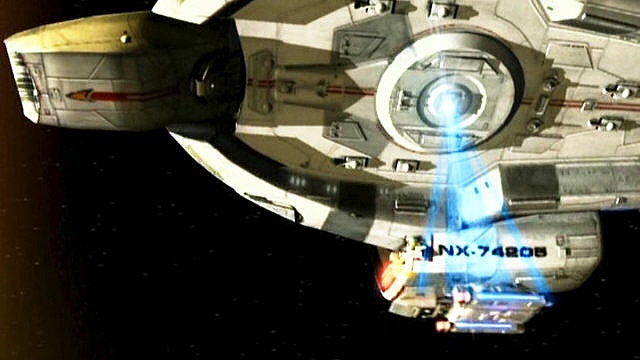
The microscopic beam - created by scientists from Scotland and the Czech Republic - allows a source of light to attract objects.
Light manipulation techniques have existed since the 1970s, but researchers say the experiment is the first instance of a beam being used to draw objects towards light.
Researchers from the University of St Andrews and the Institute of Scientific Instruments (ISI) in the Czech Republic say development of the beam may be an aid to medical testing, such as in the examination of blood samples.
A tractor beam was used to pull in spaceships and other large objects in the popular US science fiction show.
Normally, when matter and light interact, a solid object is pushed by the light and carried away in a stream of photons.
However, in recent years, researchers have realised that there is a space of parameters when this force reverses.
The scientists have now demonstrated the first experimental realisation of the concept.
Professor Pavel Zemanek of the ISI said: "The whole team have spent a number of years investigating various configurations of particles delivery by light.
"I am proud our results were recognised in this very competitive environment and I am looking forward to new experiments and applications. It is a very exciting time."
Dr Oto Brzobohaty, also of the ISI, said: "These methods are opening new opportunities for fundamental phonics as well as applications for life-sciences."
Feb 19, 2009
The Epson Infineon GPS Chip Is Small Enough to Destroy Privacy Forever

How small does a GPS chip get in its 12th round of development? Look at the match stick.
The Epson Infineon is a 12th generation GPS transmitter/receiver built upon a 65nm manufacturing process. Just 2.8 × 2.9mm (or 25% smaller than any A-GPS on the market), it's still powerful enough to communicate with satellites indoors, tracking you to the Motel 6 before your loved one discovers you—living a second life in which you rent Motel 6 rooms just to hang out and watch bad cable alone.

Jan 2, 2009
Nanoparticles Will Make Your Teeth Too Slick For Bacteria

Using a polishing technique previously employed in the semiconductor industry, a professor has discovered that it's possible to make a tooth too slick to have bacteria stick to. For reals.
The professor and his student have shown that "bad" bacteria cannot stick to the surface, which is great, since it's the type of bacteria that cause dental bills. Teeth polished with nanoparticles still may have bacteria on it, but from what we’re reading, can be easily removed. Easier than with brushing, or else this thing isn't really an advance at all.
Nano-Sized Semiconductor Dots Could Fix Your Terrible Vision

New Scientist reports that researchers at the
These quantum dots, as they're referred to, would theoretically fluoresce when hit by light packets, and serve as a light amplifier for retinal images. The patent says early tests on rats have been successful, as they showed improved vision over the control group. The upside is that this solution requires no power source, and can target specific areas of the retina, making it more of a reality than bionic eyes or begging for an eye cam.
Aug 10, 2008
Gun Cartridges Coated in Pollen-based Nanotags Could Help ID Criminals

The bullet tags are part natural pollen, part nanoparticles that are extremely difficult to wash off and can also keep skin cells stuck to the gun cartridges. The technology is said to be heat-resistant, cost effective and could be in use within a year.