Showing posts with label BioTech. Show all posts

Aug 17, 2017

New device can heal with a single touch, and even repair brain injuries

Usatoday.com - A new device developed at The Ohio State University can start healing organs in a "fraction of a second," researchers say. 
Mar 18, 2016

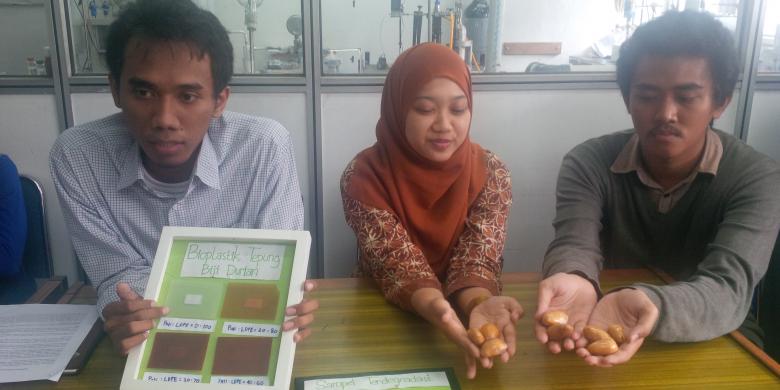
5 Mahasiswa Ini "Sulap" Biji Durian Menjadi Plastik Ramah Lingkungan

Kompas.com - Berawal dari keprihatinan penggunaan kantong plastik yang semakin meningkat dari waktu ke waktu, lima mahasiswa Universitas Gajah Mada (UGM) menciptakan Bioplastik. Bahannya pun cukup unik yakni biji buah durian.

May 11, 2015

Di Inggris Raya, Tes HIV Dapat Dilakukan Sendiri

Kompas.com - Perangkat tes HIV mandiri untuk pertama kalinya diizinkan dipakai di Inggris, Skotlandia dan Wales. Alat ini memungkinkan seseorang melakukan tes di rumah dan mendapat hasilnya dalam 15 menit.

Berbeda dengan perangkat lain, hasil tes tidak perlu dikirim ke laboratorium. Alat ini bekerja dengan mengidentifikasi setetes kecil darah, yang seringkali baru diketahui tiga bulan setelah infeksi terjadi.

Para ahli memperingatkan hasil tes positif harus dipastikan klinik, lapor wartawan BBC Smitha Mundasad.

Organisasi kemanusiaan berharap alat ini akan mengurangi sebagian dari 26.000 orang di Inggris yang belum diketahui status HIV-nya

Sama dengan tes kehamilan

Diagnosa dini dipandang memungkinkan seseorang segera mendapat perawatan dan dapat mencegah komplikasi serius. Orang-orang yang berhasil dirawat dipandang lebih kecil kemungkinan menularkan infeksi.

Tes yang "Anda lakukan sendiri" ini dibuat perusahaan Bio Sure UK dan bisa dibeli online.

Alat ini bekerja dengan cara yang sama dengan tes kehamilan dengan mengukur tingkat antibodi -protein yang dibuat sebagai reaksi terhadap virus- dalam darah seseorang.

Perangkat ini menganalisa tetesan kecil darah dari ujung jari. Dua garis berwarna ungu akan muncul jika seseorang HIV positif.

Feb 23, 2014

Researchers grow human lungs in lab for first time


Foxnews.com - In a breakthrough that could one day revolutionize transplant medicine, researchers have successfully grown human lungs in a lab for the first time, Medical News Today reported.

Using portions of lungs from two deceased children, researchers from the University of Texas Medical Branch in Galveston created a scaffold-like structure by stripping one set of lungs down to just collagen and elastin – the main components in connective tissue. 

The researchers then gathered cells from the other set of lungs and applied them to the scaffolding, before placing it in a chamber filled with nutritious liquid. Four weeks later, the team had a complete human lung – and they were able to successfully repeat the procedure using another set of lungs.

The researchers first developed this technique in 2010, and have since tested the method on rat lungs and pig lungs before testing it on human lungs.

"It's taken us a year to prove to ourselves that we actually did a good job with it. You don't run out immediately and tell the world you have something wonderful until you've proved it to ourselves that we really did something amazing,"  researcher Dr. Joan Nichols said.

Though the researchers are excited about their discovery, they said it could take a minimum of 12 years before the use of lab-generated lungs in human transplants becomes a reality.

Nov 17, 2013

Carmat's Artificial Heart 'Available Soon'

Sky.com - A French firm hopes to finish human trials on an artificial heart by the end of next year, with it being made available for patients from early 2015.

Carmat also hopes to sign a deal with a partner in the United States, to gain access to the world's largest healthcare market.

Heart assistance devices have been in use for decades as a temporary solution for patients awaiting a transplant but Carmat's product is designed to replace the heart for up to five years, mimicking nature's work using biological materials and sensors.

It hopes to have the heart made available to thousands of patients waiting for a donor. In the past many people have died while waiting for a suitable replacement organ.

The company's chief executive, Marcello Conviti, told Reuters that it is already in contact with US firms, including Johnson & Johnson, Medtronic, St Jude Medical and Edwards Lifesciences.

Carmat estimates around 100,000 patients in the US and Europe could benefit from its artificial heart, which would make the market worth more than £10.25bn ($16.46bn).

In September, Carmat got the green light from French authorities to test the first human implants of the device on four patients in three hospitals.

Earlier this year, it also won approval to proceed with human implants in Belgium, Poland, Slovenia and Saudi Arabia.

"For now the tests are going as planned," Mr Conviti said.

He would not give details but said patients selected suffered from terminal heart failure and had only a few days or weeks to live.

On these high-risk patients, the first range of tests will focus on the device's safety, with success based on whether patients survive within a month of wearing it.

If deemed safe, the devices will then be fitted into lower-risk patients and their efficacy monitored for about six months.

"If all goes well, both phases should be completed by the end of 2014," Mr Conviti said.

He said that if the results were positive, the company hoped to obtain regulatory approval to launch EU-wide within two months.

Jul 10, 2013

Biaya Bayi Tabung Hanya Rp 2,5 Juta

Kompas.com - Harapan muncul bagi jutaan pasangan suami istri di negara berkembang yang ingin memiliki anak. Sebuah proses laboratorium yang sederhana berhasil mengurangi biaya perawatan kesuburan dan proyek bayi tabung hingga hanya 200 euro atau sekitar Rp 2,5 juta.

Kantor berita AFP, Senin (8/7/2013), mengutip jumpa pers European Society fot Human Reproduction and Embryology (ESHRE) yang menegaskan, pengembangan dalam penyederhanaan proses laboratorium akan membuat biaya bayi tabung hanya 10 persen sampai 15 persen dari program bayi tabung yang ada selama ini.

Penggunaan sistem dua tabung menggantikan inkubator karbon dioksida khusus, gas medis, dan sistem purifikasi udara dalam menjaga embrio tetap sehat saat proses bayi tabung berlangsung. Sistem baru ini sudah dicoba di Belgia pada pasien dengan usia di bawah 36 tahun di mana sedikitnya delapan indung telur siap untuk proses kesuburan ini.

Dan, sejauh ini diklaim 12 bayi tabung "biaya murah" telah lahir dan kondisinya sehat. "Hasil awal kami sudah terbukti secara prinsip dan sebuah sistem yang sederhana telah didesain untuk negara-negara yang sedang berkembang, di mana perawatan kesuburan melalui bayi tabung sangat memungkinkan dengan biaya terjangkau," ujar Elke Kleskz dari Genk Institute for Fertility Technology.

Selama ini, proyek bayi tabung di negara-negara kaya membutuhkan biaya 1,5 juta sampai 3 juta euro (sekitar Rp 16 miliar sampai Rp 36 miliar). Biaya program bayi tabung ini bisa ditekan hingga biaya minimal kurang dari 300.000 euro. Namun, kini biaya tadi bisa ditekan lagi hingga hanya sekitar Rp 2,5 juta.

Program bayi tabung murah ini sedang disiapkan dan November mendatang diharapkan sudah tersedia pusat latihan bagi klinik di negara berkembang. Sudah ada lebih dari lima juta bayi tabung lahir sejak bayi tabung pertama, Louise Brown, lahir tahun 1978. Namun, biaya mahal membuat bayi tabung hanya bisa diperoleh di negara kaya atau hanya orang kaya yang sanggup membayar program bayi tabung.

Kini program itu bisa dikembangkan di negara berkembang di mana kaum perempuan di sana menghadapi stigma, disakiti dan dikecam karena dituduh sebagai penyebab pasangan tak punya keturunan. Lebih dari dua juta pasangan di negara berkembang menghadapi persoalan berkaitan dengan kesuburan.

Feb 7, 2009

Book Claims Nazi 'Angel of Death' Responsible for High Rate of Twins in Brazilian Town


A German doctor who was commissioned by Adolf Hitler to artificially increase the Aryan birthrate may be responsible for a large number of twins born in a small Brazilian town, a new book claims.

Argentine historian Jorge Camarasa, who specializes in the post-war Nazi flight to South America, alleges Nazi doctor Josef Mengele — also known as the "Angel of Death" — continued his genetic experiments with twins there, The Telegraph reported.

The Telegraph reported that one in five pregnancies in the town of Candido Godoi produce twins, often with blonde hair and blue eyes.

"I think Candido Godoi may have been Mengele's laboratory, where he finally managed to fulfill his dreams of creating a master race of blond-haired, blue-eyed Aryans," said Camarasa, who authored the new book "Mengele: The Angel of Death in South America."

Camarasa said there is "testimony that he attended women, followed their pregnancies, treated them with new types of drugs and preparations that he talked of artificial insemination in human beings, and that he continued working with animals, proclaiming that he was capable of getting cows to produce male twins."

Mengele died in 1979.