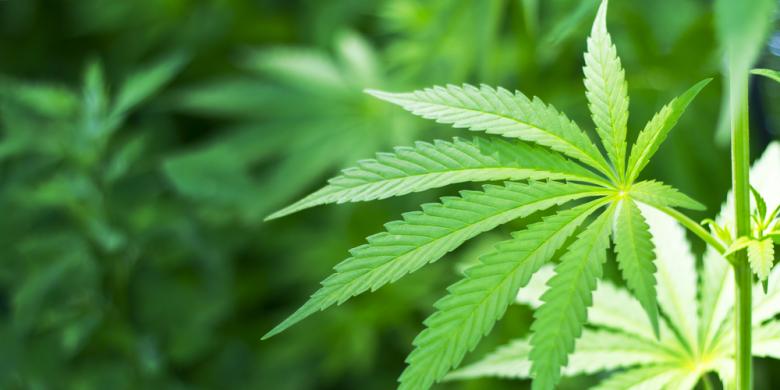
Kompas.com - Sejak ribuan tahun lalu, tanaman ganja sebenarnya sudah dipakai dalam pengobatan herbal. Namun, pemakaian ganja untuk pengobatan modern di seluruh dunia masih menuai kontroversi.
Showing posts with label Marijuana. Show all posts
Apr 13, 2017
May 6, 2016
Mitos Keliru, Ganja Selalu Dipandang Negatif
Kompas.com - Masih dianggap ilegalnya ganja dan pandangan buruk masyarakat tentang tanaman dengan nama latin Cannabis itu ditengarai sebagai akibat dari mitos yang salah selama ini.
Oct 9, 2015
Pertama di Australia, Victoria Legalkan Ganja untuk Pengobatan
Kompas.com- Tanaman ganja akan dilegalkan secara ketat untuk kepentingan pengobatan di Victoria, negara bagian pertama yang mengambil kebijakan semacam ini di Australia. Mulai tahun 2017, obat berbahan ganja sudah boleh diberikan bagi anak-anak penderita epilepsi akut.
Mar 25, 2013
Pot vending machines take root in Los Angeles
Nbcnews.com - The city that popularized the fast food drive-thru has a new innovation: 24-hour medical marijuana vending machines.
Patients suffering from chronic pain, loss of appetite and other ailments that marijuana is said to alleviate can get their pot with a dose of convenience at the Herbal Nutrition Center, where a large machine will dole out the drug around the clock.
"Convenient access, lower prices, safety, anonymity," inventor and owner Vincent Mehdizadeh said, extolling the benefits of the machine.
But federal drug agents say the invention may need unplugging.
"Somebody owns (it), it's on a property and somebody fills it," said DEA Special Agent Jose Martinez. "Once we find out where it's at, we'll look into it and see if they're violating laws."
At least three dispensaries in the city, including two belonging to Mehdizadeh, have installed vending machines to distribute the drug to people who carry cards authorizing marijuana use.
Mehdizadeh said he spent seven months to develop and patent the black, armored box, which he calls the "PVM," or prescription vending machine.
Convenience and privacy
A sliding fence protects the tinted windows of his dispensary, barely distinguishing it from a busy thoroughfare of strip malls, automobile dealers and furniture shops. A box resembling a large refrigerator stands inside the nearly empty shop, near a few shelves stocked with vitamins and herbs.
A guard in a black T-shirt emblazoned with the word "Security" on the front stands at the door. A poster of Bob Marley decorates a back room.
The computerized machine requires fingerprint identification and a prepaid card with a magnetic stripe. Once the card and fingerprint are verified, a bright green envelope with the pot drops down a slot.
Mehdizadeh says any user approved for medical marijuana and registered in a computer database at his dispensaries can pre-purchase the drug and then use the machine to pick up.
The process provides convenience and privacy for users who may otherwise feel uncomfortable about buying marijuana, Mehdizadeh said.
At the Timothy Leary Medical Dispensary in the San Fernando Valley, the vending machine is accessible only during business hours. An employee there said the machine was introduced about five months ago, and provides speedy service.
"It helps a lot of patients who are in a lot of pain and don't want to wait around to get help," Robert Schwartz said. "It's been working out great."
Mehdizadeh said he sought the advice of doctors, and decided to limit the amount of marijuana per user to an ounce per week. Each purchase from the machine yields 1/8th or 2/8th of an ounce. By eliminating a vendor behind the counter, he said, the machine offers users lower drug prices. The 1/8th ounce packet would cost about $40 — $20 lower than the average price at other dispensaries.
'It's to medicate'
A spokesman for a marijuana advocacy group said the machine also benefits dispensary owners.
"It limits the number of workers in the store in the event of a raid, and it'll make it harder for theft," said Nathan Sands, of The Compassionate Coalition.
Marijuana use is illegal under federal law, which does not recognize the medical marijuana laws in California and 11 other states.
The Drug Enforcement Agency and other federal agencies have been actively shutting down major medical marijuana dispensaries throughout the state over the last two years and charging their operators with felony distribution charges.
Mehdizadeh said the Herbal Nutrition Center was the target of a federal raid in December. He said no arrests were made and no charges have been filed against him.
Kris Hermes, a spokesman for advocacy group Americans for Safe Access, said the machine might benefit those who already know how much and what strain of marijuana they're looking for. But he said others will want to see and smell the drug before they buy it.
A man who said he has been authorized to use medical marijuana as part of his anger management therapy said the vending machine's security measures would at least protect against illicit use of the drug.
"You have kids that want to get high and that's not what marijuana is for," Robert Miko said. "It's to medicate."
Patients suffering from chronic pain, loss of appetite and other ailments that marijuana is said to alleviate can get their pot with a dose of convenience at the Herbal Nutrition Center, where a large machine will dole out the drug around the clock.
"Convenient access, lower prices, safety, anonymity," inventor and owner Vincent Mehdizadeh said, extolling the benefits of the machine.
But federal drug agents say the invention may need unplugging.
"Somebody owns (it), it's on a property and somebody fills it," said DEA Special Agent Jose Martinez. "Once we find out where it's at, we'll look into it and see if they're violating laws."
At least three dispensaries in the city, including two belonging to Mehdizadeh, have installed vending machines to distribute the drug to people who carry cards authorizing marijuana use.
Mehdizadeh said he spent seven months to develop and patent the black, armored box, which he calls the "PVM," or prescription vending machine.
Convenience and privacy
A sliding fence protects the tinted windows of his dispensary, barely distinguishing it from a busy thoroughfare of strip malls, automobile dealers and furniture shops. A box resembling a large refrigerator stands inside the nearly empty shop, near a few shelves stocked with vitamins and herbs.
A guard in a black T-shirt emblazoned with the word "Security" on the front stands at the door. A poster of Bob Marley decorates a back room.
The computerized machine requires fingerprint identification and a prepaid card with a magnetic stripe. Once the card and fingerprint are verified, a bright green envelope with the pot drops down a slot.
Mehdizadeh says any user approved for medical marijuana and registered in a computer database at his dispensaries can pre-purchase the drug and then use the machine to pick up.
The process provides convenience and privacy for users who may otherwise feel uncomfortable about buying marijuana, Mehdizadeh said.
At the Timothy Leary Medical Dispensary in the San Fernando Valley, the vending machine is accessible only during business hours. An employee there said the machine was introduced about five months ago, and provides speedy service.
"It helps a lot of patients who are in a lot of pain and don't want to wait around to get help," Robert Schwartz said. "It's been working out great."
Mehdizadeh said he sought the advice of doctors, and decided to limit the amount of marijuana per user to an ounce per week. Each purchase from the machine yields 1/8th or 2/8th of an ounce. By eliminating a vendor behind the counter, he said, the machine offers users lower drug prices. The 1/8th ounce packet would cost about $40 — $20 lower than the average price at other dispensaries.
'It's to medicate'
A spokesman for a marijuana advocacy group said the machine also benefits dispensary owners.
"It limits the number of workers in the store in the event of a raid, and it'll make it harder for theft," said Nathan Sands, of The Compassionate Coalition.
Marijuana use is illegal under federal law, which does not recognize the medical marijuana laws in California and 11 other states.
The Drug Enforcement Agency and other federal agencies have been actively shutting down major medical marijuana dispensaries throughout the state over the last two years and charging their operators with felony distribution charges.
Mehdizadeh said the Herbal Nutrition Center was the target of a federal raid in December. He said no arrests were made and no charges have been filed against him.
Kris Hermes, a spokesman for advocacy group Americans for Safe Access, said the machine might benefit those who already know how much and what strain of marijuana they're looking for. But he said others will want to see and smell the drug before they buy it.
A man who said he has been authorized to use medical marijuana as part of his anger management therapy said the vending machine's security measures would at least protect against illicit use of the drug.
"You have kids that want to get high and that's not what marijuana is for," Robert Miko said. "It's to medicate."
Jul 30, 2009
iPhone Apps for the Lawbreaker in You
You're driving along the highway, maybe exceeding the speed limit, when your iPhone calls out to you: "Police often hide here."
Glancing at the phone, you see a road map that pinpoints your exact location and, very close to it, an icon of a police car. It's time to ease the pedal from the metal.
This is why you've downloaded "Trapster," one of several "apps" — programs available for the Apple iPhone — that can help users get a leg up on the law.
If you're a blackjack player, there's an iPhone app you can use to count cards — a neat little trick that will help you beat the odds in a casino.
One added feature is that it can also can help you obtain a room in a Nevada prison and stay free for six years. (It isn't illegal to count cards, but it's illegal in Nevada to use a device to count cards.)
If you're a marijuana smoker, yet another app will show you where you can find it and buy it — with a doctor's prescription, of course.
The most popular of these apps is "Trapster," with 1.5 million users. The free program uses the GPS receiver built into new iPhones to track a driver's location and warn of nearby speed traps and red light cameras. It's also available for phones running Google Android and some BlackBerries.
Drivers can add new locations to the app by hitting buttons to mark speed traps and red light cameras for other drivers. Users can also rate the accuracy of speed trap reports, which helps weed out fake inputs.
The app potentially can help users speed or run lights more often. Nonetheless, police are largely supportive of Trapster, because they hope it will get users to slow down.
"Anything that gets people to slow down on the highway, or drive in a more responsible manner, is a good thing," said Corinne Geller, public relations manager for the Virginia State Police.
She said the state itself uses that logic to announce some red light cameras and speed-limit enforcement areas.
"We don't hide," Geller said.
Radar detectors are illegal in many states, but the iPhone app is perfectly legal because it doesn't actually detect a radar signal. It simply relies on user input to pinpoint spots where police often hide to catch speeders.
In Washington , D.C. , Police Chief Cathy Lanier was quoted earlier this month in the Washington Examiner saying that using Trapster was a "cowardly tactic" to avoid police.
But a D.C. police spokeswoman says the chief was misquoted, and the department has no opinion on the application.
She also noted that a list of the District's red-light cameras is publicly available on its Web site.
Trapster's creator, Pete Tenereillo, says that he hopes the application will get drivers to slow down.
"It's a possibility that someone would use it to try to speed up between speed traps," he said. "But honestly, this is user-generated content, and I don't know how many people would be that confident that the only speed traps are the ones that are marked in Trapster. I would love it if they were."
If you can avoid running through red lights and getting stopped for speeding, you can drive to your local casino and fire up another iPhone app — "A Black Jack Card Counter," a $4.99 program that has gaming institutions on edge.

The app allows users to record the cards played and includes a "stealth mode" that turns the screen off while allowing users to continue hitting the buttons to record cards.
It has the potential to make users a lot of money.
"If you stick to the basic strategy for blackjack, the house has a small advantage," the program's creator, Travis Yates, writes in the program's description. "But if you can keep count of the number of high and low ranked cards in the pack, you can gain a small advantage.... This small advantage, around 1%, over a long period of time can result in huge wins."
But there is a downside.
"I would not recommend using this app in a casino as you could get into a lot of trouble," Yates writes.
In Nevada , for instance, using an electronic device to keep track of cards played in a casino is a category B felony with a maximum penalty of six years in prison and a $10,000 fine, as outlined here.
The Nevada Gaming Control Board sent a letter earlier this year warning casinos in the state of the app's existence.
Jerry Markling, chief of the Nevada Gaming Control Board's enforcement division, told FOXNews.com that nobody has been prosecuted for using the app.
He added that the program's stealth mode "certainly makes one wonder what the real intent is," but he said that he would not fault Apple for allowing the program, given that it could have uses outside of a casino.
Other iPhone applications called "Cannabis" and "iPot” help users find medical marijuana dispensaries.

The Cannabis program also lists local advocacy groups and lawyers — a feature that could come in handy since all marijuana, even in states that allow its use for medical purposes, is illegal under federal law.
But it's easy to violate, as U.S. Attorney General Eric Holder says he has no plans to prosecute marijuana dispensaries operating legally under state laws.
Users certainly have no trepidation about posting their comments on Apple's forums.
"Works as promised," an iPhone owner in the San Francisco area wrote about iPot. "Learned about a new dispensary in Bernal Heights ."
An Apple spokeswoman declined to comment on all of these applications.
Subscribe to:
Posts (Atom)