
Showing posts with label EcoFriendly. Show all posts

Mar 21, 2016

The world's first solar airport no longer pays for electricity

Cnn.com - Fed up with their hefty electricity bill, managers at Cochin International Airport in southern India took matters into their own hands.
Mar 18, 2016

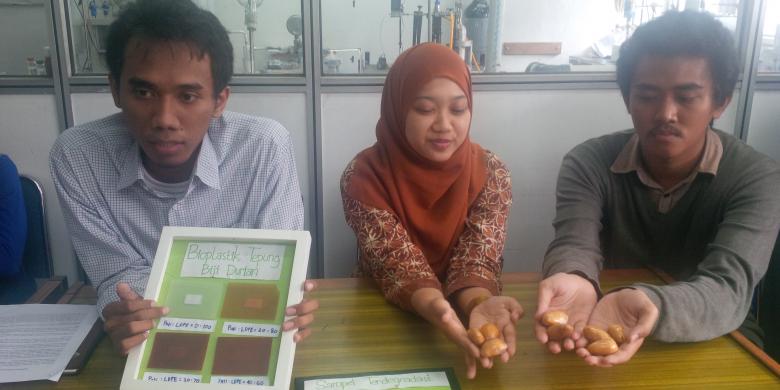
5 Mahasiswa Ini "Sulap" Biji Durian Menjadi Plastik Ramah Lingkungan

Kompas.com - Berawal dari keprihatinan penggunaan kantong plastik yang semakin meningkat dari waktu ke waktu, lima mahasiswa Universitas Gajah Mada (UGM) menciptakan Bioplastik. Bahannya pun cukup unik yakni biji buah durian.

Microsoft Test Drives (Dives?) Underwater Data Centers

Fortune.com - Microsoft thinks it’s found a way to cut high energy costs for cooling data centers: By putting them under water.

Apr 16, 2015

Gadget Rusak Bisa Jadi Uang, Dijemput untuk Didaur Ulang

Kompas.com - Perangkat elektronik, seperti gadget, yang sudah rusak dan tak terpakai ternyata bisa dimanfaatkan untuk hal yang lebih berguna. Pemilik gadget tersebut bisa menjual atau mengubahnya jadi sumbangan melalui fitur EcoCash milik iSiaga.

EcoCash merupakan inisiatif iSiaga untuk mengajak orang memberdayakan sampah elektronik yang sudah tidak terpakai. Sampah elektronik yang dimaksud antara lain berupa komputer, ponsel dan tablet, printer, kamera, televisi, mesin cuci dan pendingin ruangan (air conditioner-AC).

Strategic Advisor iSiaga Amrit Gurbani mengatakan inisiatif ini diambil karena menimbang sampah elektronik tersebut banyak terdapat di rumah-rumah. Namun, orang-orang justru kesulitan untuk membuangnya.

"Saat ini tidak ada solusi recycle seperti ini di indonesia. Misalnya kalau mau buang TV bekas, kan malah kita yg bayar tukang sampah karena dia ngangkatnya berat," terangnya saat memperkenalkan EcoCash, Senin (16/3/2015).

"Dengan EcoCash orang akan mudah menjual sampah elektronik mereka. Ini tidak untuk dijual lagi, tapi kami recycle," imbuhnya.

iSiaga, ujar Amrit, tidak melakukan daur ulang itu sendirian. Perusahaan yang bergerak di bidang tech support ini berperan sebagai jembatan penghubung antara pengepul barang bekas dengan mereka yang ingin menyingkirkan perangkat elektronik tak terpakai.

Saat ini ada tiga pengepul barang bekas yang digandeng untuk mendaur ulang perangkat elektronik dari iSiaga.

"Kita tidak recycle sendiri. Ada tiga perusahaan recycle besar yang kerjasama dengan kita. Recycler yang kerjasama dengan kita ada di Bekasi, Jakarta Selatan dan Jembatan Lima," kata pria yang juga menjabat sebagai CEO di Lighthouse Indonesia itu.

Barang-barang yang sudah diterima itu akan dibongkar dan dipisah-pisahkan part di dalamnya. Selanjutnya, part tersebutlah yang akan dijual oleh pengepul barang bekas.

Pengguna pun tidak perlu repot mengantar perangkat elektronik bekas yang akan dijual. Amrit menjanjikan perusahaan akan menjemput barang tersebut, selama masih dalam area Jakarta dan Tangerang.

"Barangnya bisa kita jemput, lalu kita cek apakah sesuai dengan yang dijelaskan di telepon. Kalau sudah, kita akan transfer pembayarannya atau bisa juga memilih untuk didonasikan ke YCAB (Yayasan Cinta Anak Bangsa)," imbuhnya.

EcoCash sendiri dapat ditemukan bila Anda mengunjungi situs web iSiaga. Harga yang ditawarkan pun berbeda antara perangkat yang masih dapat digunakan dengan perangkat yang sudah mati total.

Feb 3, 2014

Scientists create printer that uses water instead of ink

Illustration
Smh.com - Like any ordinary printer, this machine ingests a blank page and spits it out covered in print.

But instead of ink, it uses only water, and the used paper fades back to white within a day, enabling it to be reused.

A team of chemists claims their "water-jet" technology allows each page to be reprinted dozens of times, a money- and tree-saving option in a digital world that still relies heavily on hard copy.

"Several international statistics indicate that about 40 per cent of office prints [are] taken to the waste paper basket after a single reading," said Sean Xiao-An Zhang, a chemistry professor at Jilin University in China, who oversaw the work.
Advertisement

The trick lies in the paper, which is treated with an invisible dye that colours when exposed to water, then disappears.

The print fades away within about 22 hours at temperatures below 35 degrees as the water evaporates – quicker if exposed to high heat, Zhang and a team wrote in a paper describing their invention in the journal Nature Communications.

The print is clear, claim the designers, and the technology cheap.

"Based on 50 times of rewriting, the cost is only about 1 per cent of the inkjet prints," Zhang said in a video on the Nature website.

Even if each page was re-used only a dozen times, the cost would still be about one-seventeenth of the inkjet version.

Sean said dye-treating the paper, of the type generally used for printing, added about 5 per cent to its price, but this is more than compensated for by the saving on ink.

Crucially, the new method does not require a change of printer but merely replacing the ink in the cartridge with water, using a syringe.

"Water is a renewable resource and obviously poses no risk to the environment," said the study.

Previous work in the quest for a disappearing ink has tended to yield a low-contrast print, often at a high cost, and sometimes using hazardous chemicals.

Zhang and his team used a previously little-studied dye compound called oxazolidine, which yielded a clear, blue print in less than a second after water was applied.

They have managed to create four water-printed colours so far – blue, magenta, gold and purple – but can only print in one hue at a time, for now.

The next step is to improve both the resolution and the duration of the print.

They are also working on a machine that will heat pre-printed sheets of paper as they are fed into the machine, fading the pages instantaneously for re-printing.

At 70 degrees, the colour disappears within about 30 seconds.

Zhang said the dyed paper was "very safe" but toxicity tests are underway on mice to be sure.

Oct 30, 2013

Tesla Model S gets Consumer Reports' recommendation

Cnn.com - In May, Consumer Reports called the Tesla Model S the best car it had ever tested, but it still wouldn't recommend it.

That was because the magazine hadn't yet gathered enough reliability data on the still-new model. Well now the survey data is in, and Consumer Reports has officially given the Tesla (TSLA) Model S the sought-after red checkmark.

The Tesla Model S is now Consumer Reports Recommended.

The Model S isn't perfect, according to its owners, but none have reported any problems with the car's battery-powered electric drive system or with the enormous iPad-like touch screen inside the cabin.

The problems that have been reported have had to do with things like squeaks, rattles and malfunctioning sunroofs and door locks.

Overall, the reliability rating for the Model S was average, according to the magazine. But that rating, combined with the car's stellar test scores, was enough to earn the recommendation.

The Model S earned a score of 99 out of a possible 100 in the magazine's performance tests, which ties for the highest score any car has ever received. It would have scored even higher except for the fact that it has to be recharged on long trips, Jake Fisher, head of auto testing for Consumer Reports, said in May. Fisher called the car's performance "off the charts."

Depending on price, the Model S has a driving range of between 208 and 265 miles. A full charge takes about six hours from an ordinary 240 volt outlet, according to Tesla. The car can be charged much more quickly at one of the "supercharger" stations Tesla has installed along various highways in the country. Tesla is also rolling out quick battery swapping capability at some of those stations.

The Model S has already won awards from car magazines like Motor Trend and Automobile, but Consumer Reports is widely regarded as being the most influential magazine among car shoppers. Consumer Reports, published by nonprofit Consumer's Union, purchases all the cars it tests and does not accept paid ads.

Tesla's next vehicle is supposed to be the Tesla Model X crossover SUV but, after that, the company's plans call for a less expensive car and, possibly, other products.

Apr 10, 2013

This Entire Building Is Powered By Its Algae-Filled Walls

Fastcoexist.com - Algae may still be years away as a source for road and jet fuel. But could it power whole buildings before long?

If you think that’s crazy, then look at this recently completed five-story residential building in Hamburg. It is covered by panels filled with algae, a fast-growing form of biomass. The building pumps water, nutrients, and compressed CO2 between 129 "bioreactors." When the sun shines, the algae multiplies as a result of photosynthesis. The system collects the residue, then converts it to biogas, which is burned in a boiler. Together with a heat recovery system and solar panels on the roof, the building is completely energy independent, according to its creators.

The panels are 98 inches by 28 inches, 0.78 inches thick, and cover about 2,150 square feet, on two south-facing sides. Known as the BIK, the building, which has 15 apartments, is an entry to the International Building Exhibition and was completed last month. It will open to the public soon.

"Algae will be cultivated for the generation of energy but also to control the light inflow and shading of the building. The facade will be constantly in motion and changing its color," says exhibition spokesperson Anna Vietinghoff. "Production of regenerative energy will not take place in an invisible energy center but will be an explicit component of the architectural concept."
BIK is a joint project of Spitterwerk Architects (which also has a concept for an algae-powered tower), Colt, Strategic Science Consult, and ARUP, which designed and installed the panels.
"It might well become a sustainable solution for energy production in urban areas, so it is great to see it being tested in a real-life scenario," says Jan Wurm, Arup’s European research leader, in a press release.
The companies haven’t said how well the building will perform in winter (algae doesn’t grow without light) or how much it might cost. But, encouragingly, they do say it’s safe to get rid of the wastewater via the sewer. Potentially, the concept could power whole buildings with low running costs and act as a CO2-sink at the same time. If so, that’s a pretty good combination.

Mar 10, 2010

The Green Ferrari: Italian Supercar Goes Electric

For decades, Ferrari has made its name selling the sort of testosterone-packed cars that get petrolheads hot under the collar.

But now the Italian car-maker is ditching its famous red livery - temporarily at least - as it experiments with going green.

The company yesterday unveiled the Ferrari 599, a 200mph electric hybrid vehicle that aims to cut pollution and fuel consumption while retaining the brand's breathtaking acceleration and performance.

But it remains to be seen whether the 599's ability to start silently and run on a zero-emission electric motor will put off car enthusiasts who delight in the explosive roar of an old-style Ferrari firing up.

The prototype's appearance at the opening day of the Geneva Motor Show in Switzerland stunned visitors.

The hybrid vehicle - which uses the electric motor to back up a more traditional 6.0-litre V12 petrol engine - even sported a bright metallic green paint to reinforce its environmentally friendly credentials.

The aim is to have the green technology as an option across Ferrari's entire range of cars by 2015.
But don't get too carried away with the idea that the macho Formula 1 stable has suddenly gone all politically correct in an attempt to save the planet.

Rather, it is being driven by the EU's tough environmental targets to cut carbon dioxide emissions, which could otherwise see Ferrari's supercars squeezed out of the market.

Ferrari reckons the 599 would cost twice as much as the £207,000 petrol 559 GTB Fiorano on which it is based. But by the time the technology has been ' industrialised' in four years' time, the price should come down to below £300,000.

The two-seater will accelerate from 0-60mph in 3.5 seconds - quicker than the standard version - and to 125mph in 10.4 seconds.

Under braking, the electric part of the hybrid system 'captures' energy that would otherwise be wasted from braking or slowing down, and uses it to recharge the batteries, which in turn can propel the car by electric power.

CO2 emissions are cut to 270g/km - a 35 per cent reduction on a conventional petrol-only model. It is expected to do up to 25 miles to the gallon, whereas the petrol- only version manages under 16mpg.

A Ferrari spokesman said: ' Ferrari has applied its F1 technology to the design, engineering and construction of a new kind of electric motor which also helps optimise the dynamics of the car.'


Feb 21, 2010

Scientist Discovers Fruit Peel and Newspaper Can Be Turned Into Ethanol Fuel

Rubbish powered the DeLorean's Mr. Fusion Home Energy Reactor power source in Back To The Future, so it makes sense that now we're in the future we can make ethanol fuel from fruit peel.

It's the work of professor Henry Daniell at the University of Central Florida, who can also turn newspaper into fuel fit for running a car with—using more than 10 enzymes from plants to break the rubbish into sugar that is then fermented into the ethanol fuel, producing less greenhouse gas emissions than electricity or gasoline. Plus, it decreases the pressure put on landfills—and might help stave off the "iPad effect" and keep newspapers in print for a while longer. Zing!

Mar 15, 2009

Coffee-Fueled Car Is Surprisingly Practical

Turns out you can make biofuel from just about any oily plant product. Corn may be the standard, but coffee works at least as well, and it makes your car smell like a Starbucks!

Experts say it takes about 5-7 kg of coffee grounds to get one liter of biofuel, which with a medium-sized production would yield a cost of about $1 per gallon. Plus, it's already used: you can just walk around to your local coffeeshops and convenience stores and stock up the same way you would on vegetable oil.

Creating fuel from the grounds uses the same procedure as other biodiesels, transesterification, which is sort of complicated to explain but fairly inexpensive. The US estimates they consume over 7 tons of coffee each year, which would yield about 340 million gallons of biodiesel.

Mar 6, 2009

Oil Rigs Become Luxury Hotels

What do you do with 4,000 decommissioned oil rigs in the Gulf of Mexico? Instead of blowing them up—costing millions and killing aquatic life—Morris Architects' Hotelier At Sea project turns them into Dubai-esque luxury hotels.

According to BldgBlog, approximately 4,000 oil rigs in the Gulf of Mexico will be decommissioned within the next century. Morris proposed to convert this space into exclusive, self-sufficient eco-friendly, high-end resort islands off the Gulf of Mexico, dubbing it their very own American Dubai, as you can tell from the yacht parking lot seen in the picture.


Currently, the method of removing these sorts of oil rigs would be to blow them up, which would cost millions of dollars and would kill a ton of sea life in the process. With a deck of each oil rig at 20,000 square feet, that creates about 80 million square feet of usable space. One reason this proposal is cheaper than blasting is that the rooms themselves are efficiently shipped out on big tankers and installed by stacking and sliding open, Transformers-style.

Feb 24, 2009

New $3 Light Bulb 12 Times More Efficient, Lasts 60 Years

Cambridge University researchers have developed a $3 LED-based lightbulb that is 12 times more efficient than regular tungsten light bulbs, three times more than low energy ones. It lights up instantly, lasting for 100,000 hours,

The cheap lightbulb could cost the energy bill in any house by as much as three quarters. In fact, if everyone replaced their current light bulbs, the proportion of lighting in electricity consumption would go down from 20 to 5 percent worldwide.

They also avoid using any toxic materials, like lead: The new LEDs use gallium nitride, which until now was too expensive to obtain because it had to be grown on sapphire wafers, which brought the cost of the lightbulbs to $28 each.

The new method, developed by Cambridge University-based Centre for Gallium Nitride, uses silicon wafers, bringing the cost down to $3 each. And if you think this is a thing of the future, think again: Prototypes are already being produced and the light bulbs may reach the market in a mere two years.

Feb 21, 2009

MIT Shock Absorbers Harness Speed Bump Energy For Better Fuel Economy

A team of undergraduate students at MIT have developed a shock absorber that actually generates electricity from bumps in the road. This results in up to a 10 percent improvement in overall vehicle fuel efficiency.

Their prototype shock absorbers use a hydraulic system that forces fluid through a turbine attached to a generator. The system is controlled by an active electronic system that optimizes the damping, providing a smoother ride than conventional shocks while generating electricity to recharge the batteries or operate electrical equipment.

"GenShock" technology is ideal for heavier vehicles, as added weight equates to better performance. Naturally, the military and the trucking industry has expressed a lot of interest in the idea, but those involved with the project have even bigger plans. They "want this technology on every heavy-truck, military vehicle and consumer hybrid on the road"—and by the looks of things, they just might get their wish.